Quantum-Si Pioneer Grant Program logo with the words displayed in bold, blue capital letters on a light background.

Announcing the First Quantum-Si Pioneer Grant Winner: Resha Rajkarnikar 

We’re thrilled to spotlight the first winner of our Pioneer Grant, Resha Rajkarnikar, a graduate student in Mythreye Karthikeyan’s lab at the University of Alabama at Birmingham. Resha’s project focuses on an exciting and understudied area of cancer biology: the regulation and functional role of mitogen-activated protein kinase 15 (MAPK15) in ovarian cancer.

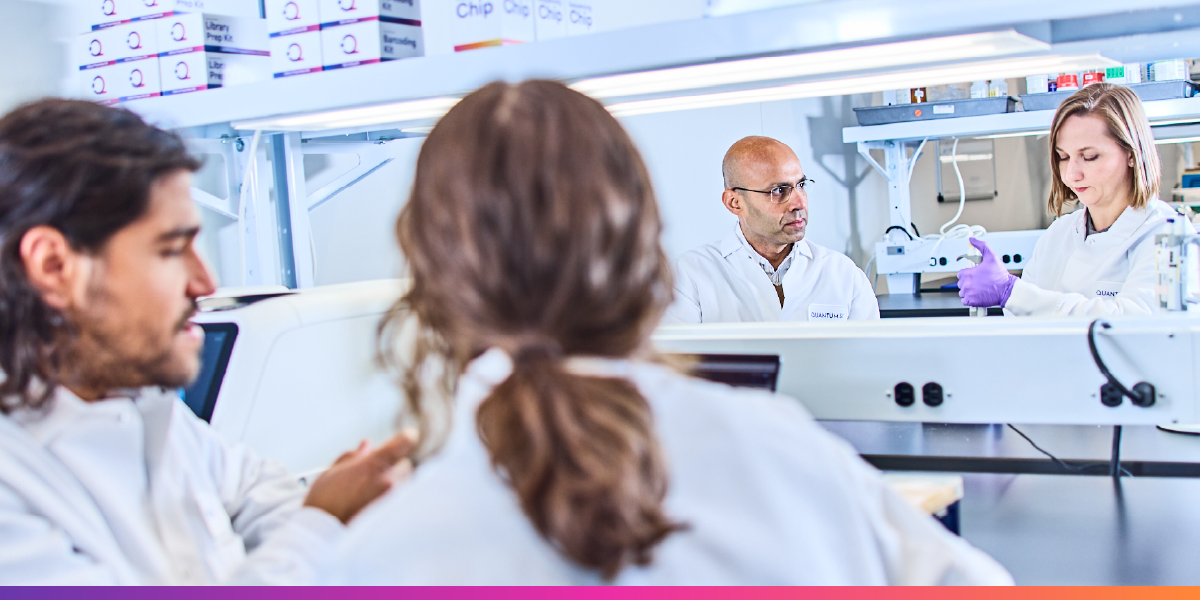
Four scientists in white lab coats work in a modern laboratory, with one using equipment and others engaged in conversation. Shelves with supplies and lab instruments are visible in the background.

Scaling Smarter: A New Era in Preclinical Animal Testing 

Next-gen protein sequencing (NGPS) is poised to transform our ability to study ncORFs. Traditional proteomics methods can struggle to detect tiny or low-abundance proteins. In contrast, NGPS can bridge the gap between genomic data and functional proteins, allowing researchers to detect smaller peptides and translate ncORFs more effectively.

Colorful, abstract molecular structure illustration with intertwined chains of spheres, shown on a gradient background transitioning from yellow to green to blue.

Exploring Bioactive Peptides For Weight Loss Treatments to Immune Defense

Next-gen protein sequencing (NGPS) is poised to transform our ability to study ncORFs. Traditional proteomics methods can struggle to detect tiny or low-abundance proteins. In contrast, NGPS can bridge the gap between genomic data and functional proteins, allowing researchers to detect smaller peptides and translate ncORFs more effectively.

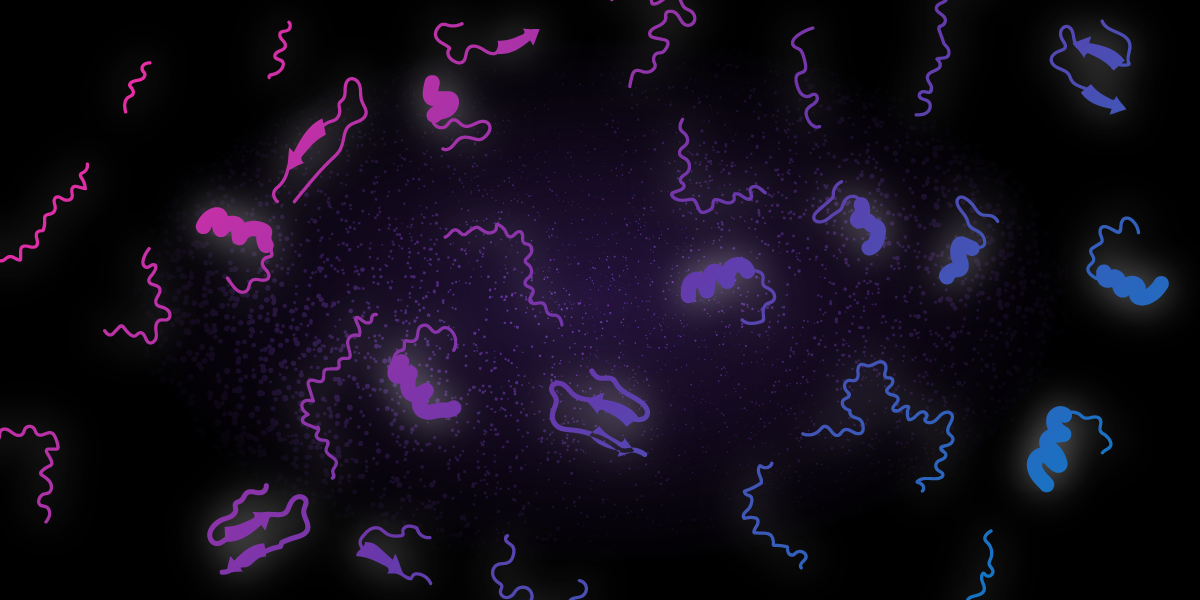
Abstract image showing wavy, squiggly lines in pink, purple, and blue, scattered across a black background with a glowing purple center, resembling microscopic organisms or bacteria.

Microproteins and the Dark Proteome: Tiny Molecules with Big Potential

Next-gen protein sequencing (NGPS) is poised to transform our ability to study ncORFs. Traditional proteomics methods can struggle to detect tiny or low-abundance proteins. In contrast, NGPS can bridge the gap between genomic data and functional proteins, allowing researchers to detect smaller peptides and translate ncORFs more effectively.

Logo of Johns Hopkins University, featuring a blue shield with a book, globe, and stripes above the university name in blue capital letters on a white background.

Customer Q&A: A New View of the Central Dogma

August 1, 2024 • Winston Timp, PhD In a 2020 article co-authored with his father,1 Dr. Timp noted that “The prevalence of heterogeneity in mRNA translation, posttranslational modifications (PTMs) and posttranslational structural processing are revealed only by direct protein-level analysis, and there is a pressing need for it.” At the time of the publication, proteomics relied mainly on a […]

A Quantum SI proteomics device above the bold text: Without proteomics your research is incomplete on a blue and purple gradient background.

Next-Generation Protein Sequencing: The Next Big Thing in Genomics

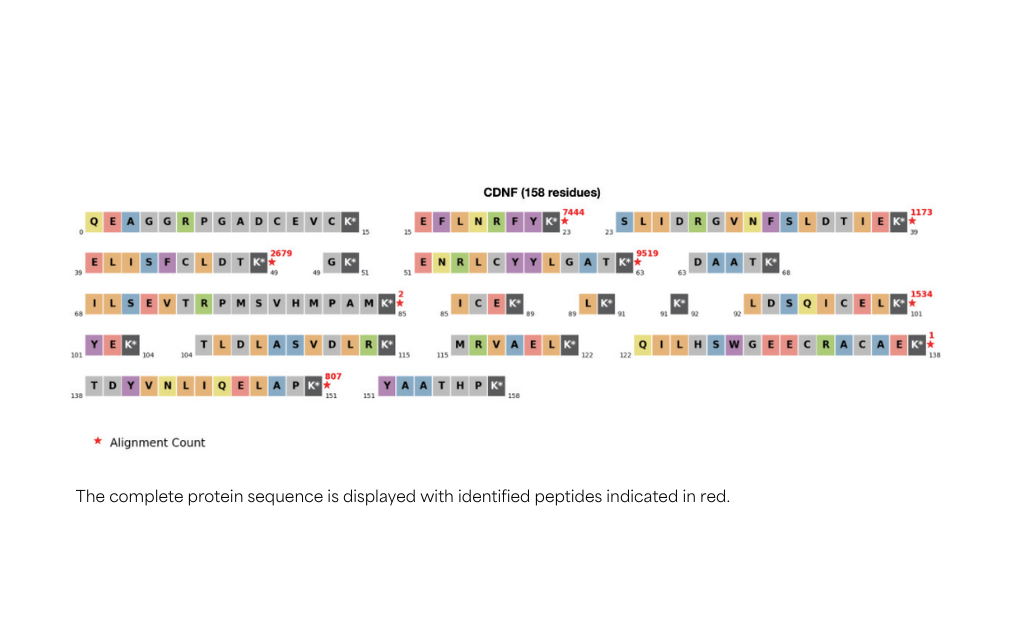
By Brian Reed, PhD, Head of Research At the Festival of Genomics meeting held earlier this summer, Dr. Gloria Sheynkman, Assistant Professor at the University of Virginia, captivated a full audience with her presentation on the use of next-generation protein sequencing (NGPS) on the Quantum-Si Platinum® instrument to detect disease-relevant proteoforms. This significant interest in […]

A color-coded protein sequence map (158 residues) shows segments, with identified peptides marked in red and the legend noting Alignment Count. Text below explains identified peptides are shown in red within the sequence.

Upgrades to Analysis Software Unlock New Discoveries

By John Vieceli, PhD, SVP of Product Development Last week, Quantum-Si announced an exciting update to our suite of software tools, reaffirming our commitment to continually enhance next-generation protein sequencing (NGPS) for our customers. Following the introduction of the v2 sequencing kit in Q1, this Q2 software update marks another step forward. Additionally, we’ve pre-announced […]

A man in a dark suit and light shirt stands with arms crossed, smiling at the camera, against a white background.

Dawning a New Era in the Future of Proteomics

By Jeff Hawkins The history of scientific research is mostly filled with periods of incremental progress, wherein seemingly disparate studies slowly—and sometimes unknowingly—chip away at conceptual and technological barriers. As these small moments of progress accumulate, they begin to reach a critical mass tipping point, one punctuated by the collapse of barriers and the sudden […]