Protein Sequencing Solutions
The End-to-End
Solution for
Protein Insights
Next-gen protein sequencing (NGPS) delivers single-molecule precision with expanding coverage enabling targeted protein analysis at your benchtop.

Library Preparation Kits
High-confidence protein sequencing from nanogram inputs with Library Preparation Kit V3.
Protein Sequencing Kits
Achieve deeper protein insights with ready-to-sequence chips, recognizers, and aminopeptidases.
Unlock Proteome Depth with Sequencing Kit V4

Accessible NGPS
Single-molecule resolution to identify and characterize proteins on a benchtop instrument

Insights Beyond Proline
Navigate challenges posed by proline-rich domains, common in antibodies and membrane proteins, with Sequencing Kit V4

Expanded Coverage
New recognizers, peptidases, and improved bioinformatics offer an 85% increase in sequenceable peptides

Protein Mixture Precision
Enhanced bioinformatics to identify peptides with greater confidence

Innovative
Fuel your research at the speed of reality with our Technology Access Program
Sequencing Through Proline
- V4 detects amino acids beyond proline, which accounts for 6% of the total amino acids in the human proteome and over 40% of peptides generated by Lys-C digestion
- Proline is abundant in vital proteins that are difficult to analyze by mass spec, common in membrane proteins, antibodies, and transcription factors
Proline’s unique structure impacts the peptide fragmentation for mass spec analysis, a phenomenon referred to as the “proline effect,” which restricts sequencing by mass spec. The V4 kit delivers improved chemistry that sequences through proline rich regions, expanding sequencing insights on Platinum.
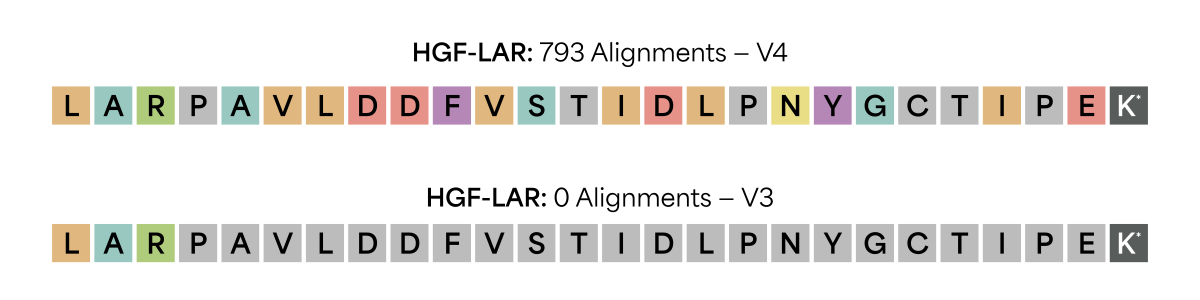
Expanded Proteome Coverage
Upgraded chemistry improves single-molecule sequencing by adding glycine (G) and methionine (M) recognition and enhancing alanine (A) and serine (S) recognition. The inclusion of X-prolyl aminopeptidase allows for cleavage of proline-rich peptides. Improved bioinformatics, including enhancements to amino acid calling and alignment algorithms, delivers higher-quality data with V4, enabling richer data capture on the sequencer.
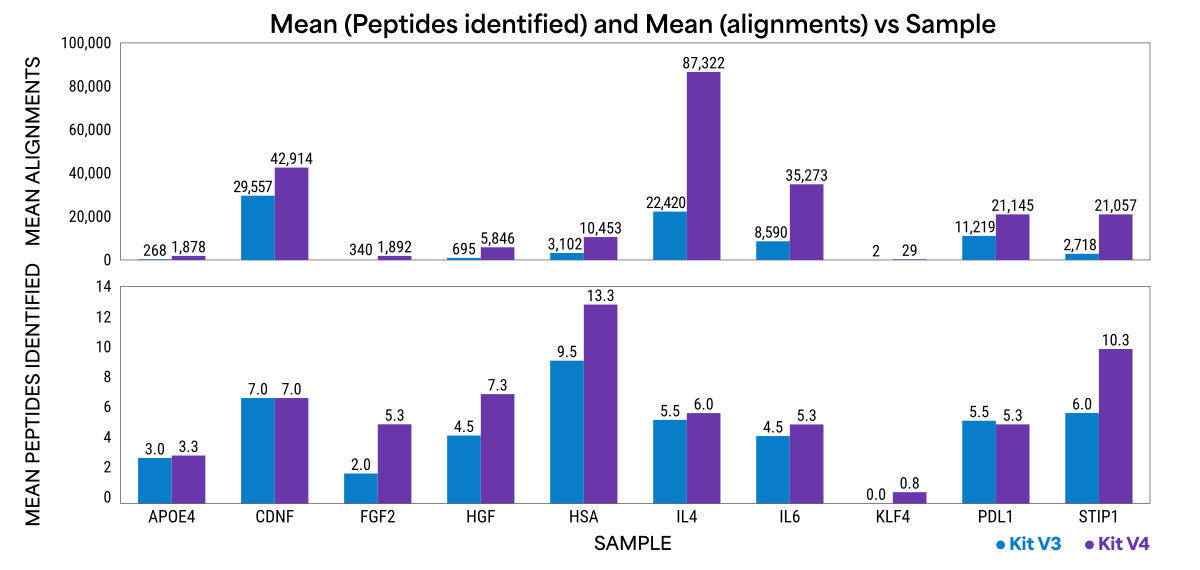
Expanded coverage achieved by the V4 Sequencing kit was demonstrated with panel of ten recombinant proteins that were digested into peptides, and sequenced using the Platinum Pro with both the V4 and V3 kits showing:
- Increased peptides coverage in 9 of 10 proteins
- Increased peptide alignments (sequenced copies) in 10 of 10 proteins
Protein Mixture Precision
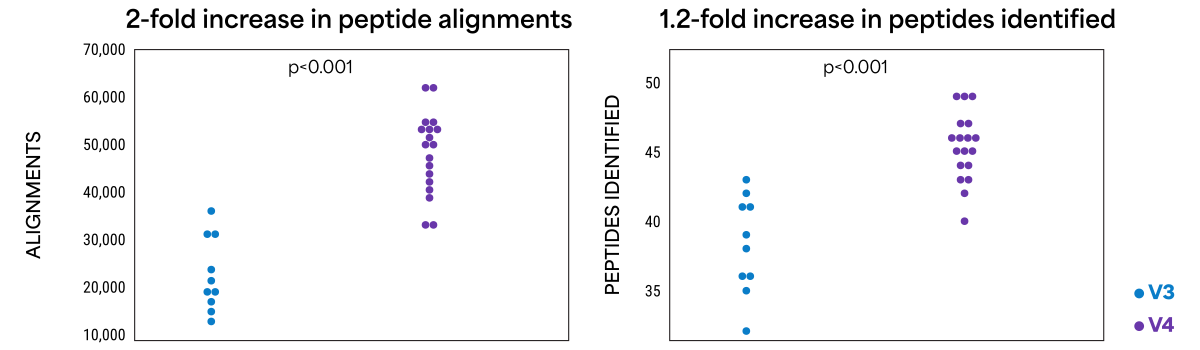
Upgrades to the analysis software boost confidence in accurate protein identification in mixtures using V4. An equimolar mixture of ten proteins sequenced with V4 demonstrated increased peptide alignments, resulting in increased precision in peptides identified compared to V3.
Sequence Antibodies
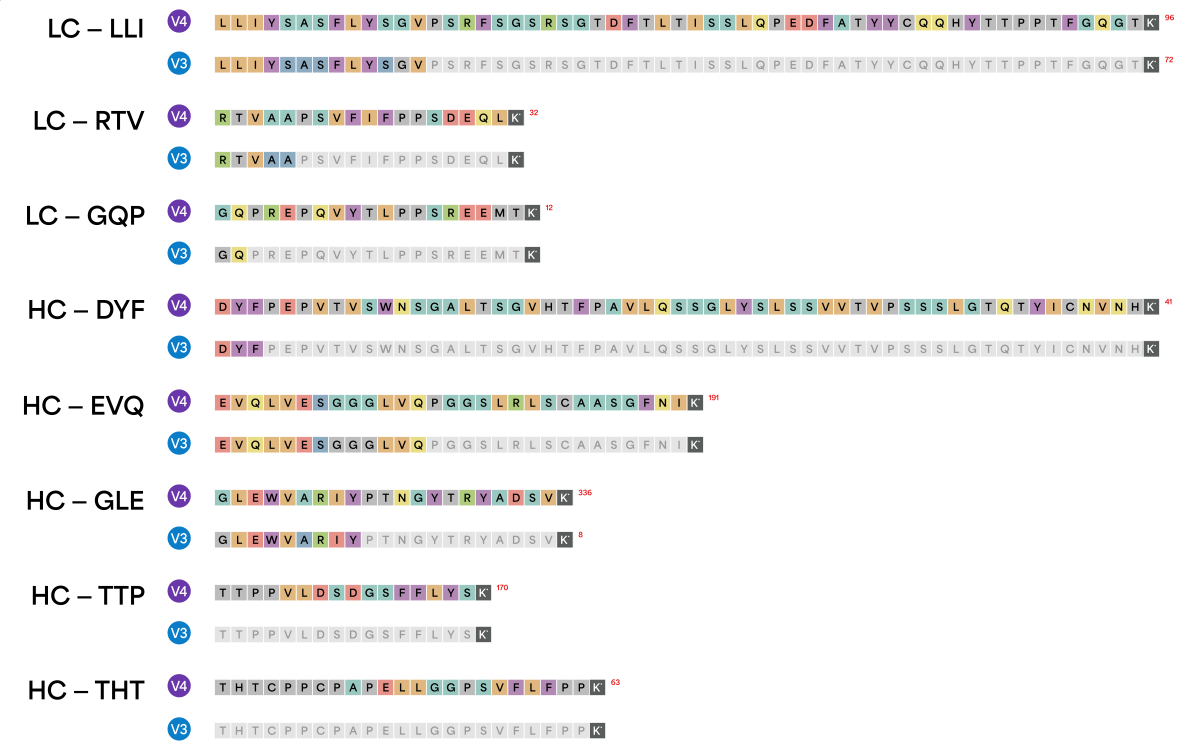
Prolines play a crucial role in antibody structure and function, shaping complementarity-determining regions (CDRs) and immunoglobulin loops. We sequenced trastuzumab, an anti-HER2 monoclonal antibody used in cancer treatment, on the Platinum Pro, to demonstrate the improved coverage obtainable with V4, exhibiting:
- 2.5-fold more peptide coverage in heavy and light chains compared to V3
- Significant increase in amino acid calls after proline with V4 chemistry
Characterize Proteins by Immunoprecipitation
Traditional methods for identification of proteins enriched by immunoprecipitation (IP) vary in their resolution, where Western blot offers qualitative to semi-quantitative measurements that are antibody-dependent, and mass spectrometry can produce exhaustive data inclusive of proteins that may be nonessential to a study. Platinum Pro with the V4 kit is an accessible non-antibody-dependent, higher-resolution option optimized to identify target proteins with concise data readouts.
- Sequence IP products on Platinum Pro for clear identification of protein interactors
- Explore signaling pathways, antibody binding partners, and other protein interactions
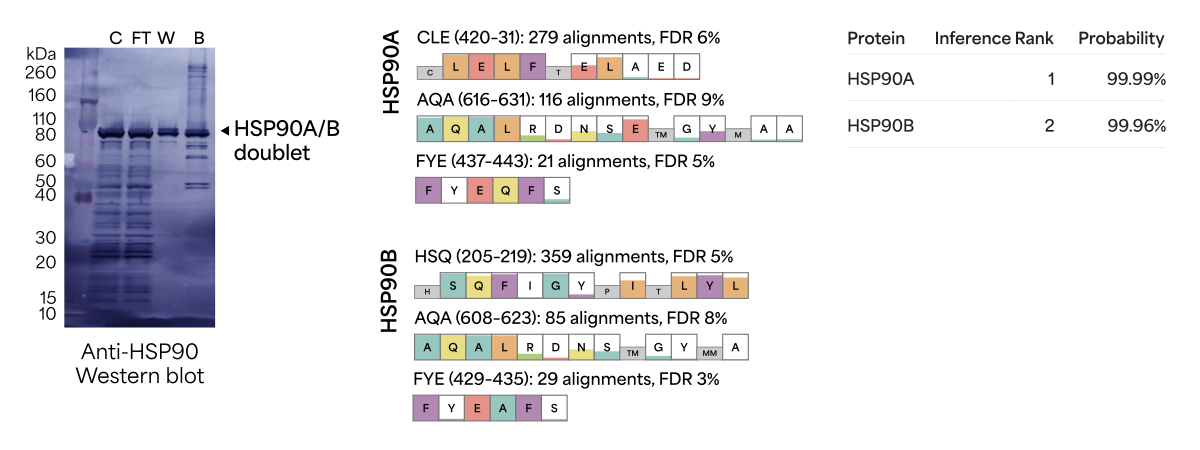

Explore our resources to discover how next-gen protein sequencing with Platinum Pro can enhance your protein research
The Platinum instrument, kits, and software contain everything you need to prepare, sequence, and analyze proteins. Sequencing Kit is the second step in Quantum-Si’s Next-Generation Protein Sequencing workflow.
The Platinum instrument, kits, and software contain everything you need to prepare, sequence, and analyze proteins. Library preparation is the initial step in Quantum-Si’s Next-Generation Protein Sequencing workflow.
In this study, published in the Journal of Proteome Research, Gloria Sheynkman and her team evaluated the ability of the recently released Platinum single-molecule protein sequencer to detect proteoform-informative peptides. Platinum employs fluorophore-labeled recognizers that reversibly bind to cognate N-terminal amino acids (NAAs), enabling polypeptide sequencing within nanoscale apertures of a semiconductor chip that can accommodate single peptide molecules.
This article, published in Science, illustrates how the study of the proteome would benefit greatly from methods to directly sequence and digitally quantify proteins and detect posttranslational modifications with single-molecule sensitivity.
Since our groundbreaking debut in Science in 2022, Quantum-Si has been at the forefront of protein sequencing innovation. Our commitment to progressive innovation has led to significant advancements in our next-gen protein sequencing technology.