Introducing the New V3 Sequencing Kit
Bringing Advanced Protein Insights Into Focus


Enhanced<br> Insights
The power of our single-amino acid resolution platform is amplified with the addition of Aspartic acid (D) recognition and improved performance of LIV, NQ and R recognizer. Explore protein functions and interactions in health and disease.

Simplified<br> Workflow
Accelerating results with less hands-on time and AI-powered analysis tools for elevated protein insights making protein sequencing more accessible.

Progressive<br> Innovation
Our latest recognizer set expands access to protein characterization and amino acid variation to accelerate your next breakthrough.
The Power of Next-Generation Protein Sequencing
With the power of the Platinum V3 Sequencing Kit, researchers can look deeper at protein variation with improved peptide alignments and deeper coverage. Protein identification and inference powered by kinetic signatures is amplified by the addition of Aspartic acid (D) recognition, our kinetic database, and AI-powered software model driving confidence for protein identification
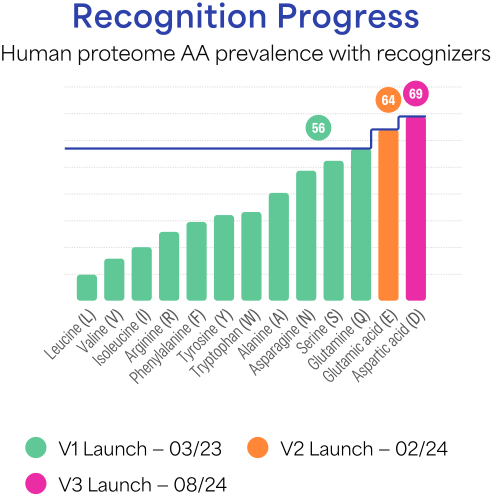
Our V3 recognizer set expands access to the amino acid diversity in the human proteome by more than two-fold since published in Science, 2022.

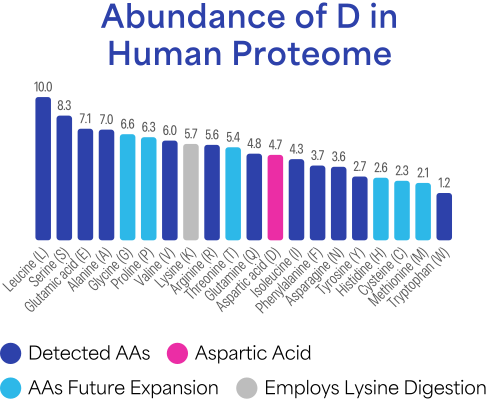
Aspartic acid (D) accounts for nearly 5% of amino acids where the D recognizer — together with improved performance of LIV, NQ, and R recognizers — elevates the ability to explore the human proteome with increased coverage and value to maximize your research.